Showing posts with label winter light. Show all posts

It could be a winter song


Les cantates de Bach – allant des ‘soucis’ de l’homme fragile qui chante sa détresse et implore la pitié (à travers des chants et des duos/dialogues d’une beauté intense) aux éruptions de jubilation et d’éloge (sublimées dans des textures contrapunctiques et des harmonies) et se terminant par un choral entonné par la communauté.


(Inspiré par une réflexion de B-C Han sur Rilke, qui évoque les soucis de "l'animal fragile" et qui distingue « l’éloge de l’imploration » )


longing for light


The darker the days, the more intensely I feed on light and its many derivative reflections & refractions. Walking to and from work, through dark streets, I intently fix my gaze on dancing rows of streetlamps vanishing into the distance, with squinted eyes I bravely stare into the glaring headlights of an oncoming truck, I bide my time at crossings to revel in the red harmonies of traffic lights and taillights. 

And best of all is the shimmering shadowy world of a rainy street at night – the dark gleam of wet asphalt (B’s black sun indeed!), the trailing lights, the dark hurried shades, the pale phantom faces of people waiting at a bus stop (staring at their phones). 

When I’m not out there in the world, dazzled by its shiny lights, I cherish the quiet luminosity of the printed pages of the book I'm reading. 
I read about longings for light and transcendence, startlingly similar across regions, cultures and ages.  From Baal in Zenobia’s Palmyra to Sol Invictus [unvanquished sun] in Aurelius’ Rome to Christmas Day.


Notes
[Aurelian] established, as the central and focal point of Roman religion, a massive and strongly subsidised cult of Sol Invictus.
The birthday of the god was to be on 25 December, and this, transformed into Christmas Day, was one of the heritages which Christianity owed to the solar cult.
[…] Aurelian was deeply influenced by the Syrian veneration of the Sun which the relatives of Septimius, coming from that land, had done so much to extend.
Zenobia’s capital Palmyra […] was a center of solar theology, as its temple of the Sun-god Malachbel (Baal)[…] shows.

Origen (d254) linked Christ to the rising of the sun – and in the same period  a mosaic beneath St Peter showed a composite Christ-Helios.

(from Michael Grant  - The Climax of Rome)

modes of vanishing


Vanishing light, vanishing points, vanishing rain ....
Equally agreeable  modes for those who cherish the ambiguities of  receding depths & shades of light


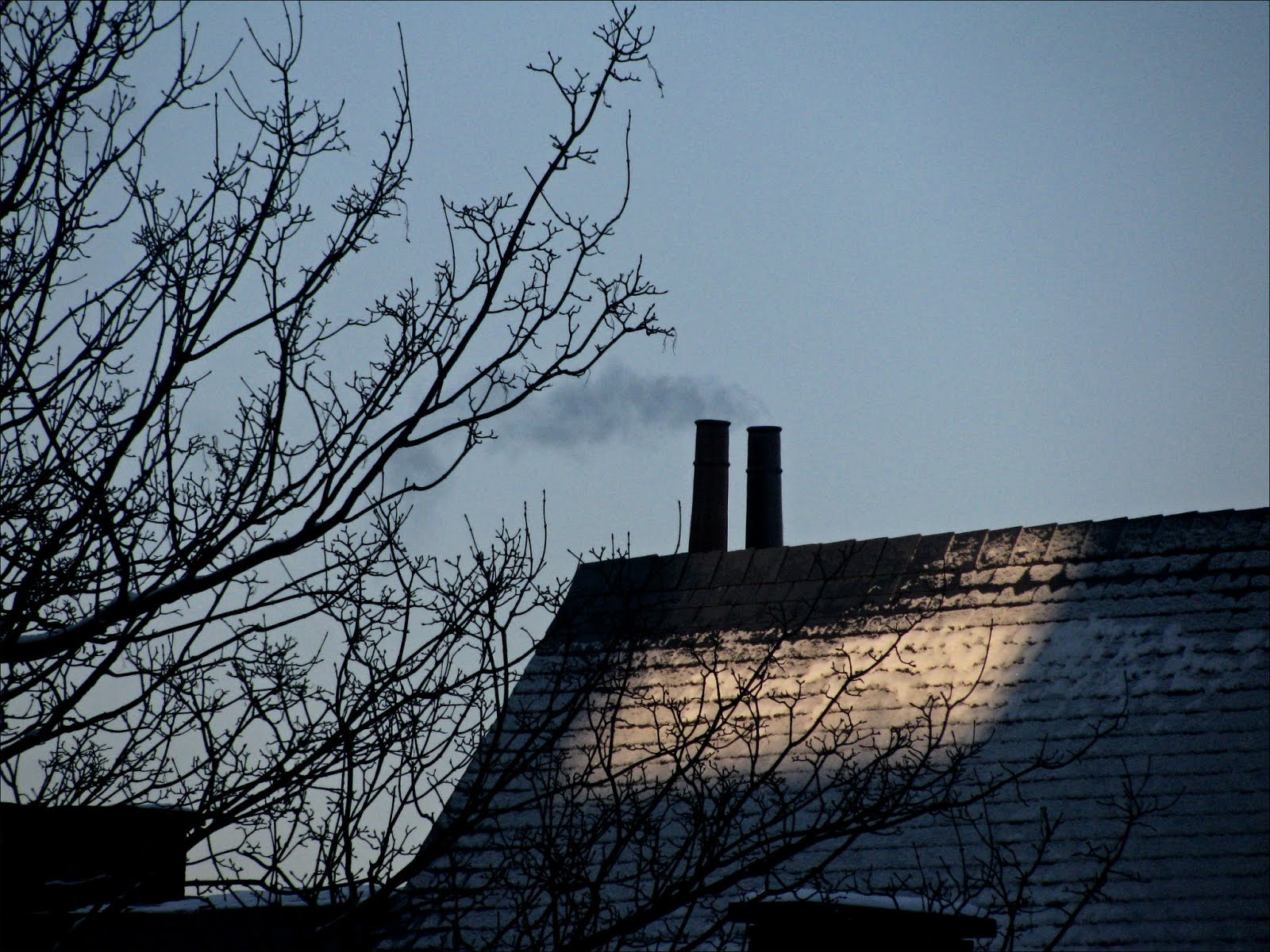
The elation of sunlight on a rooftop (or: the day I read about sprezzatura)


Only a couple of days ago I rejoiced at the sight of a sunlit, snowy roof - ah, that bright patch of light in the gathering dusk...

But now, while the radiator is whirring and clucking, a gloomy silence reigns outside.
Are it the grimy window and the snow-laden sky or is it, paradoxically, the sheer muffling dizziness of whirling snow-flocks that explains this sombre stasis?

The snow has obviously reinforced my house-arrest. Though I am already shuffling through the apartment at an amazing speed (and with a single crutch!), outside I still struggle to keep a perilous balance, panicking at the mere sight of icy sidewalks.
But this less-valid persona of mine has also uncovered unexpected reservoirs of sociability: I now blithely chat with taxi-drivers ( whose experience encompasses an astonishing range of medical and legal aspects of traffic accidents). And I have speedily shed deeply ingrained inhibitions to solicit the help of unknown passers-by – if only to be able to cross one of those slippery sidewalks.


Being stuck inside, and today even deprived of sunlight, I travel around images of earlier light-hunting strolls.

This is also a good time to revisit past exhibitions, letting the catalogue of the 2004 Hopper retrospective making up for this winter’s missed exhibition in Paris.

These paintings of sullen people sitting or standing in bare rooms – staring, brooding – depressingly inert, if it weren’t for the bravura of light patches on the wall and the floor.
Those blind walls, stern buildings, empty streets - all quite inhospitable, if it weren’t for the generosity of that nonchalantly stroking light.

And it must be a good book, which quotes Hopper as saying “There is a sort of elation about sunlight on the upper part of the house. You know, there are many thoughts, many impulses, that go into a picture ...I was more interested in the sunlight on the buildings, and on the figures than in any symbolism.”
Besides, how utterly satisfying, to read a catalogue text that officially endorses quiet, clandestine affinities:
“the similarity between Hopper’s Parisian stairway and Xavier Mellery’s same subject”)


Thus I continued my tour of cherished books and images, invigorated by their grace, their bravura - (their sprezzatura? ).
Quite grateful for these sentences, pictures, sights & memories that act “like subtle gold threads in the fabric of one’s life. Given the right slant of light.”(1)


(1) Sprezzatura : the story

(& Sprezzatura: the Wikipedia entry )


When diligence is due ...


"Due Diligence" , “Binding Offers”, “Exclusive Negotiations” , “Sale and Purchase Agreement”, ...


Not the kind of Investopedia jargon I usually burden this blog with. Well, I haven’t been burdening this blog with anything else either for the last month... Apologies to my blog readers! The Diligent Worker has indeed eclipsed the Frivolous Flâneur. That’s how it goes when the company you work for is about- to-be-sold . And as these Merger&Acquisition processes tend to be highly inefficient in their use of Diligent Worker -resources, normal business hours are way too short to reach, let alone properly announce, a deal.


But blog readers need not worry (1) ... even in full M&A fury, I have kept up the good flâneur-habits. Such as paying lavish attention to the changing lights and skies of the unfolding season, from shimmering autumn to frosty winter.


And all along I have been accompanied by a wonderful book to wake up to each day: Eugène Fromentin : “Les maîtres d’autrefois. Belgique – Hollande.” It was a delight to have this 19th century French Romantic painter making me appreciate anew the startling diversity in ways of seeing (from the glorious apotheoses of a Rubens to the pensive chiaroscuros of a Rembrandt).


Note - publicity
(1) a reassuringly long & winding post is upcoming! (about landscape paintings on show in Lille)


Winter light in Brussels (or: Memories of Glamour & Grime)


A small town kid’s fascination for both the glamour and the grime of the city is hard to match. I must have been ten when I first fell in love with a city, Brussels as it happened – while waiting with my parents for the night train to France in the station of Schaerbeek, at that time the Brussels terminal for the Compagnie Internationale des Wagons-Lits . Ah, the excitement of eating a sandwich in a Brussels grand café – with its intimidating waiters clad in black, its windows half covered by little lace curtains hung on gleaming copper railings - wholly immersed in the exhilarating noises of trains & clattering cutlery.
Before boarding our train the whole family would still go for a short walk outside, in the streets of Schaerbeek. It would be a cautious walk, with all the kids holding hands and with my mother clutching her handbag, because you never knew what could happen in the big city! Especially in these rather sombre streets of the station quarter, where I particularly remember a quite daunting avenue, alongside a little gloomy park, with old stately houses covered with sooth - all exuding an air of “grandeur déchue”.


At age 24 I finally made it to Brussels for real, moving to a small apartment on the fourth floor of an old house in Schaerbeek. From my window I could see turning a big neon lit Mercedes star, which was perched on top of a high rise near Brussels North, another Brussels station. This was the real thing, a “real big city” kind of view I thought, promptly projecting all my longings for exciting urban life in this tipsily turning neon sign at Brussels North . It was there that I would take the tram from and to the city centre. And also when going on foot, my journey would take me through the North Station quarter - so exotic & unfamiliar.
I would wander through lively streets full of Turkish and Moroccan shops and restaurants, I would fixedly stare at the pavement while crossing the infamous red district street near the railway, a street filled with slowly advancing cars and with loitering men avidly looking into the neon lit windows which ignominiously displayed bored women in sultry poses .


Only a few streets further from the North station were the shops I was regularly raiding, the huge (in my provincial eyes) Fnac records & bookshop (which was still about records & books back then, now it is a stressful multi-media centre). And of course the blessed little 2nd hand record shop where people were apparently dumping all their old collections of quality LPs when buying CD’s. There I not only got Kraftwerk’s shimmering neonlights LP, but there I also started to build up my classical LP collection.
It was a true treasure trove – and coming back home in my sparsely furnished flat, I would sit on the ground, with my back to the wall, looking out of the rooftops through the opposite window, and listen listen – to those so touchingly human and humble and yet dazzlingly brilliant Bach cantatas, to Glenn Gould playing the Goldberg variations, to the divine and melancholy Monteverdi, to the gay and frivolous Mozart simmering underneath with umbral sadness.
Just as I myself was simmering with all the contradictory longings and anxieties of a 25 year old who has just arrived in the city ... .


And for a long time, even when living in other parts of Brussels , I would still go for long walks in Schaerbeek. Perhaps no other borough so encapsulates the essence of Brussels, exhibiting so many contradictory traces of past & present, offering a home to so diverse a population. Native ‘Brusselaars’, young & trendy people, well-off bourgeois (less & less though) and many many waves of immigrants .
In some neighbourhoods you can still sense the atmosphere of the village Schaarbeek once was, before being swallowed up by the big city. In other streets, with a nostalgic suburban feel, you can spot the fading traces of once buzzing small industries and artisan shops. Elsewhere you can get startled by unexpected railway beds surging out of old brick tunnels and then continuing amidst park-like bushes in the middle of a gsplendid residential lane. Schaarbeek’s rich bourgeois period did leave many grand art nouveau houses and a great park too. Some of the streets have remained neat and uppity, others have fallen victim to urban decay and grime, but always, always one is curious to see what is around the next corner.


No, one never gets bored when taking a walk in Schaerbeek, especially when dazzling winter light sets ablaze rusty tram rails and grimy windows alike.


winter light


Time: quite early on a Saturday morning during the Holiday season.
Weather: temperature well below zero; a clear sky.
Setting: a train rattling through Brussels’ industrial outskirts.
Mood: temporarily elated.


Ah, early morning frosty winter light…. Slowly illuminating a pale blue sky with the faintest of pinkish glows – and suffusing the roofs & upper parts of buildings with a warm coppery radiance. The kind of light that gets even the grimiest industrial landscape smoldering & glimmering. Riding a train through such a wintry limpid atmosphere is a pure delight. One could spend hours gazing out of the window.

Except that there’ s also a book demanding my attention.

A serious book, by a serious writer, deserving my full serious attention!

Hmmm – how nicely the sun-light is refracted by the book’s rough paper . Shall I hold the book more upright, to capture all of the light streaming in? Or perhaps I should just tilt the book a bit to the right? And what if I lay it like that, obliquely on the little table? Look - it’s made of brittle golden parchment, this book. Soon it’ll be set ablaze! Oh…… now the train has taken a bent, the sun’s gone and there’s the plain black-lettered pale paper again. (photo’s shot: 11 - pages read: 2)


I have to change trains in Tournai – where the platforms are deserted, far too freezing cold , so all the waiting passengers huddle together in the station hall. It’s a large 19th century, bulky station hall, with many rows of arched & pillared windows. No doubt meant as a tribute to Tournai’s great Romanesque cathedral, unless it was specifically built to celebrate the generous patches of golden light on the red-tiled floor?
A few minutes before my train arrives, I get outside, walking shivering up & down the platform and watching the strange movements of a girl on the opposite, sun-flooded platform. What is she doing? Gliding forward, then stepping back, waving her arms, now feinting something like an attack, then almost doing a pirouette.
Oh, I see, to fend off the cold she’s fencing with her shadow!


From Tournai it’s only a short ride to Lille, in the North of France. When I first went there, almost 15 years ago, it was still a struggling town, uncertainly looking for a new life beyond its decaying industrial past. Since then it has become quite a confident, trendy city linked by fast trains with London and Paris. It has spruced up its historical centre, bubbles with shops & restaurants & bars, and has attracted many service industries & lots of cool folk.


But something of the vagueness & wistfulness of past glories, something of the tedium of decline, can still be sensed in the smaller towns surrounding Lille. Especially when taking the tramway to Roubaix, clattering through a sub-urban landscape now mercilessly & frostily lit by a glaring white sun. There is the fading glamour of early 20th century art-deco houses, mansions alternating with humble workmen’s houses. Then a non-descript post-industrial landscape with gaudy shopping malls surrounded by vast asphalted parking spaces. And finally, sturdy Roubaix itself, with its weighty decaying bourgeois-industrial heritage. But it’s now definitely much neater and more smugly middle-class than 15 years ago - the grime and the crumbling have mostly gone.


And yet, there’s still this air of provincial desolateness, of relative poverty. Or is this because, on this icy-cold Saturday between Xmas and New Year, people either stay at home or have flocked to the cozy shopping delights of Lille? Anyway, it’s not the merry-go-round (with only a few lonely kids on it), so utterly lost in the white winter glare of a large empty square, that will bring joy. Nor the freezing wind from the east, which blows scraps of papers through empty & vainly Xmas-lit streets. And the festive red carpets on the pavements only serve to highlight the pathetic lack of passers-by.

Most cafés & restaurants are closed, so it’s in a rather grubby sandwich bar that I replenish calorie reserves & warm my icy hands at a mug of hot tea. And there I decide that, at minus 3 ° C, aimless wandering about in desolate towns is perhaps not a brilliant Holidays idea.
And so I resume my voyage to find the Northern Light.


Because that was the true destination of this trip: an exhibit of Nordic painters in the Palais des Beaux Arts of Lille.

Readers of this blog know it is my firm conviction that a painter’s sensitivity to light is inversely correlated with his or her daily exposure to sun. It is light deprivation which makes artists attentive to the faintest variations in intensity & quality of light. Hence it are the painters of the North that can make us fall in love with what little light they get to see, not the sun-flooded Italians (except perhaps the Venetians , undoubtedly because of that strange lagoon-haze which filters their sun light).


And in my quest for Northern light I am not disappointed …. I can bask all I want in Nordic crispy crystalline light – refracted & reflected in snowy landscapes, or surreptitiously gliding over a wall, or so quietly shimmering at a window sill. The soothing stillness of winter light, whether it be outside or inside.


(But perhaps also the numbness of winter light? …. “as freezing persons recollect the snow” ….. also the oppressive stillness of winter light?.... “darin der Schnee des Verschwiegenen treibt”…. )


When I leave the museum, the city sparkles in the violet hour – an abundance of electric lights have gone up , mixing their glow with the purest indigo radiance coming from a frosty sky. And for a few dazzling minutes the world remains suspended in this violet hour, hovering between day & night, between city lights and luminous sky.

Soon the city lights win out, profusely pouring out of shop & café windows, glittering & twittering in decorations everywhere. People are thronging in the streets, cafés and restaurants are crammed full. Full of people eating & drinking & shouting & chattering to keep the cold dark night away. So, high time to seek refuge again in a train & a book.


northern winter light


Whence this yearning for summer light? Whence all the praise bestowed on abundant southern light?
Might not the rarer northern winter light dazzle the soul too?